Kohl's · Concept
Kohl's ZzzZoo — a kid-friendly ecosystem
Upgrade the family-based shopping experience.
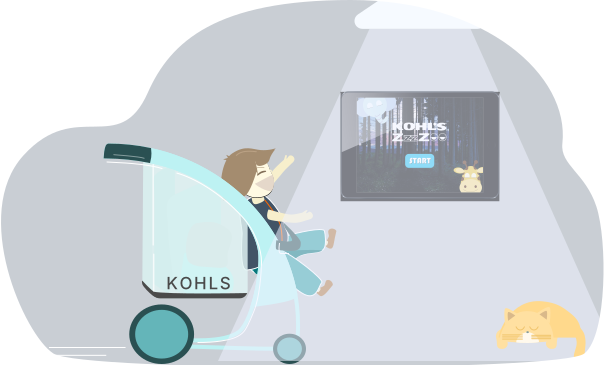
“I have to keep an eye on her to make sure she stays in the cart.”
A customer told me this on one of my store visits, while doing her best to keep her daughter quiet and safe in the cart. According to Kohl’s data, she represents about 53% of customers, who shop in store with kids. Clearly, there’s a challenge here.
My role
An independent internship project
Kohl’s ZzzZoo was an independent project I led during my internship at Kohl’s headquarters in Milwaukee — from ideation and UX research to wireframes, prototyping and presentation. It was a great way to learn how today’s retail and eCommerce world works.
Design highlights
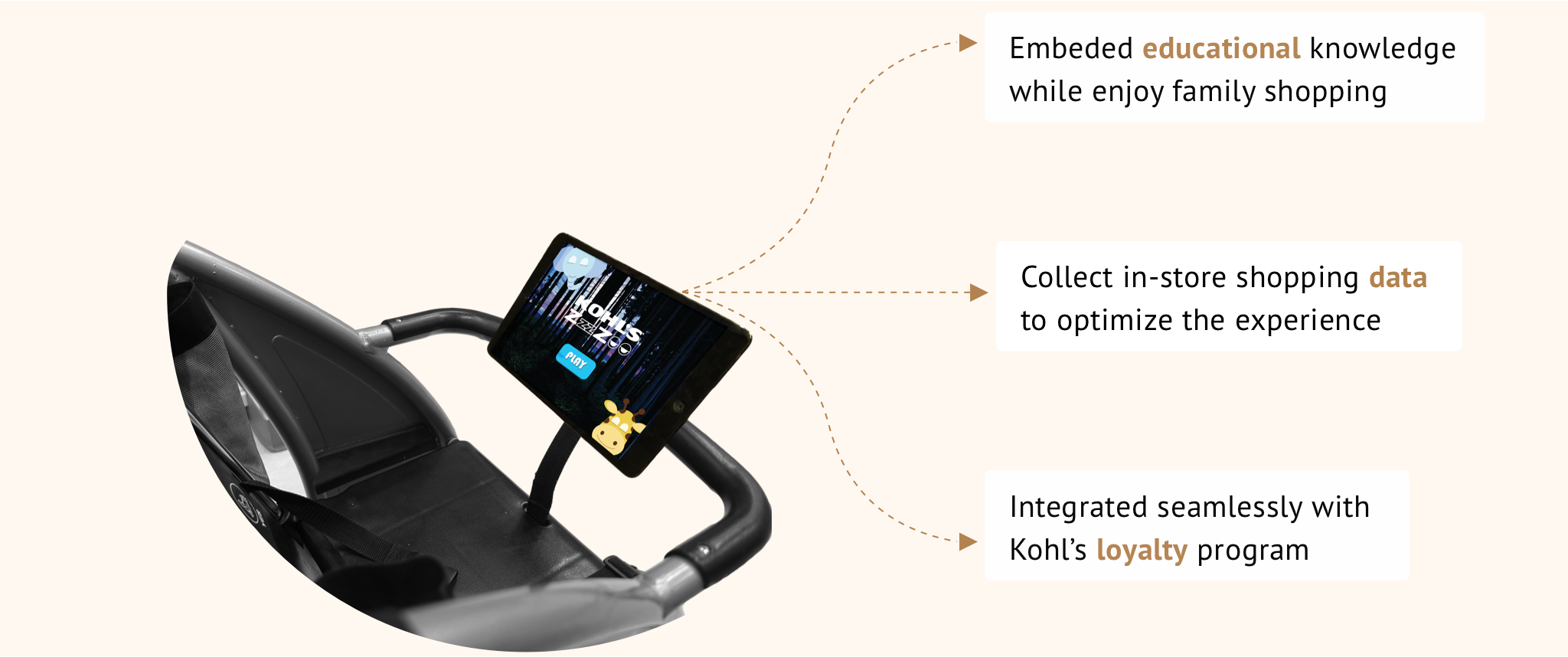
Build a kid-friendly ecosystem
Research insights
Key design rationale
In-store shopping can’t simply be replaced by online
- of shoppers are in-store only
- 78%
- of total sales come from in-store-only customers
- 64%
- of sales come from in-store purchases
- 72%
For confidentiality, only some actual values are shared.
Families choose Kohl’s, and Kohl’s chooses families
Over half of Kohl’s customers shop with kids very often.
Kids have a huge impact on the shopping experience
And the only thing they interact with is the shopping cart.
Design process
Observe, listen and empathize
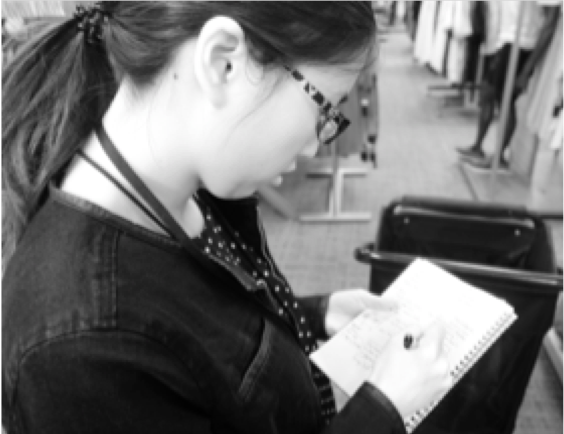
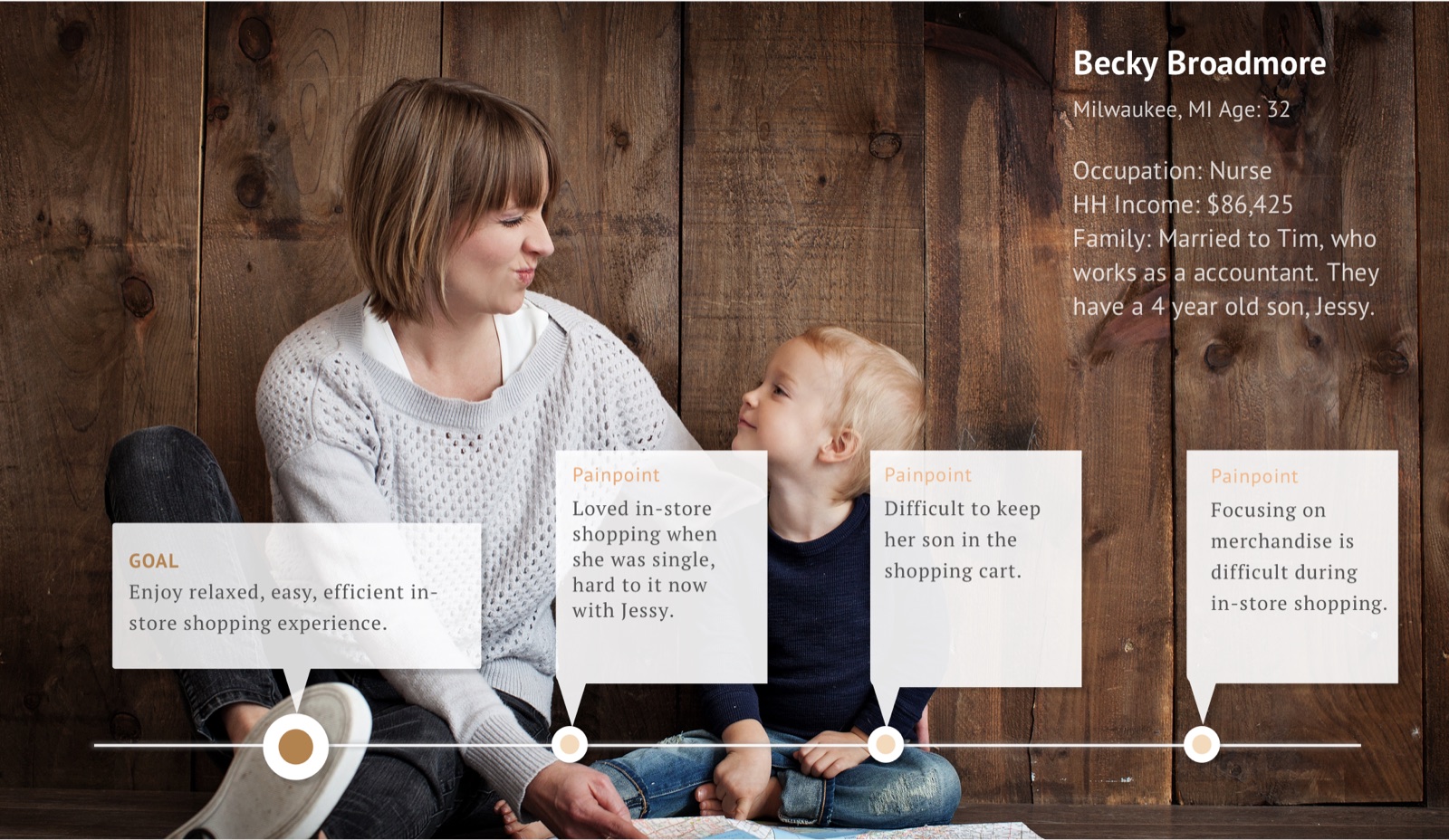
From 6 in-store observations across 5 stores and 11 interviews with customers and associates, I created a persona, Becky, and her experience map to highlight the key findings.
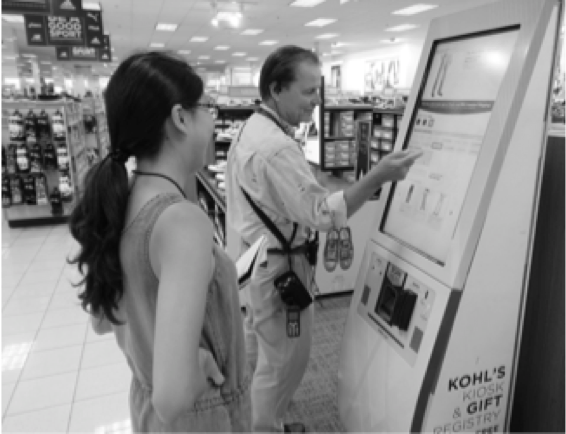
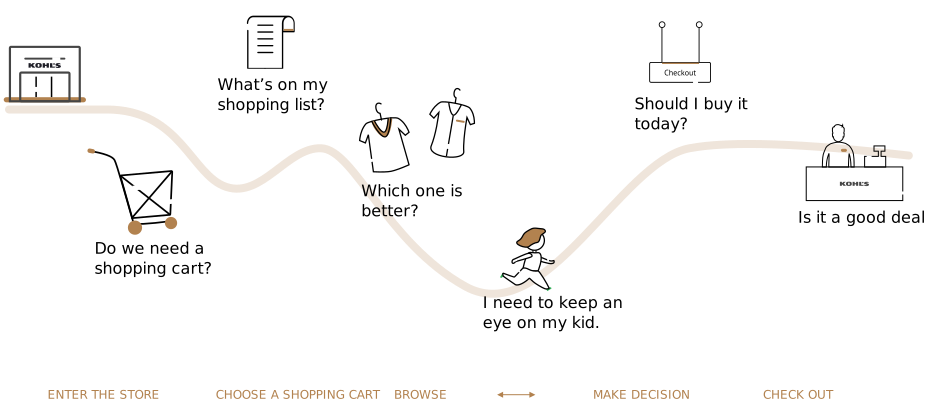
- Most parents get a cart if their kid fits in it.
- Kids love having a cart to slide and shop around.
- When the wait is too long, kids get restless.
- Parents are unlikely to use the fitting room.
Data analysis
Propose an upgraded experience
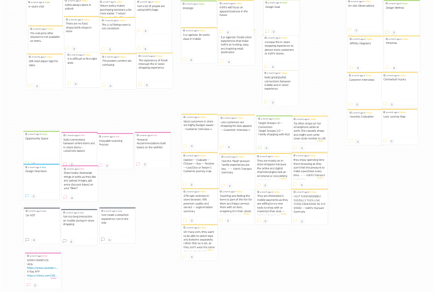
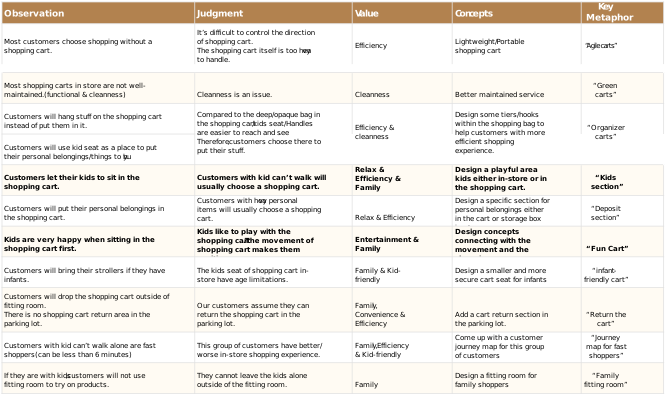
With the first round of research in hand, I used an affinity diagram and the Elito method to build the design and make key decisions about the flow and interaction details.
Design ideation
Storyboard sketching
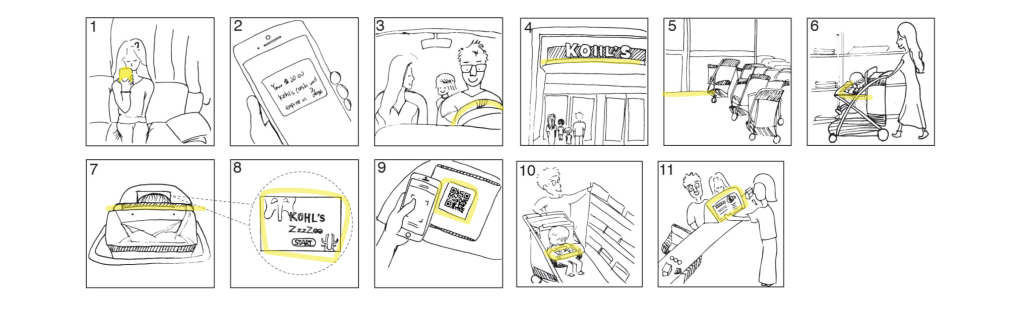
I like storyboards for connecting the dots between research and the concepts in my head — especially on projects that need early buy-in. They bring your audience into users’ daily lives and spark a real, iterative conversation about improving the in-store experience.
Testing & iteration
There is no end in design
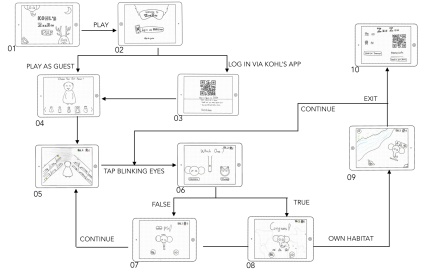
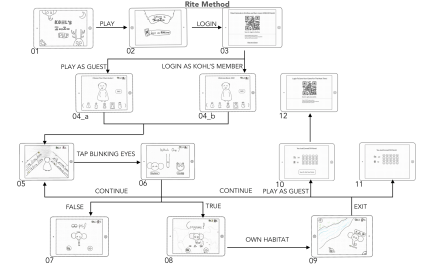
Using the RITE method, I tested the core flow with a paper prototype, sorting issues into four groups to iterate quickly: obvious cause and quick fix; obvious cause but hard fix; no obvious cause or solution; and issues caused by other factors.
Strategy design
Working with data in mind
As interest in ZzzZoo grew, one question kept coming up: what’s the business value? How much could this concept bring in?
Estimating business impact this early is always hard, but working with design strategy and the business data team, I estimated the sales increase using the latest traffic and conversion data from 5 sample stores, deliberately conservatively. That extra mile paid off when several teams later asked for walkthroughs of the concept.
Visual design
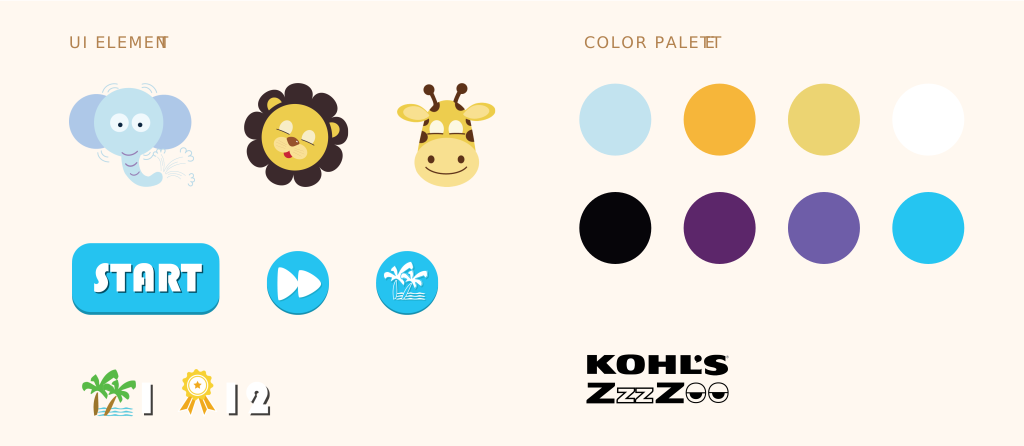
Style language
Design walkthrough
A trip to Kohl's ZzzZoo
-

Becky's Kohl's Cash expires soon, so she plans some family shopping this weekend. -
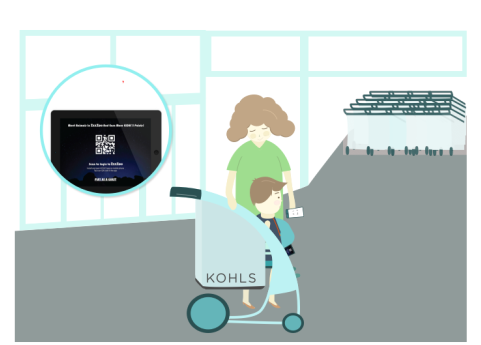
Jessy asks his mom to scan the QR code in the Kohl's app, so he can continue his animal discovery journey. -
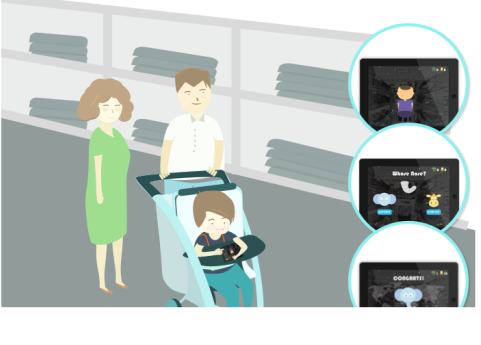
They have a great time shopping while Jessy learns about animals. This time he finds an elephant worth 12 rewards points! -
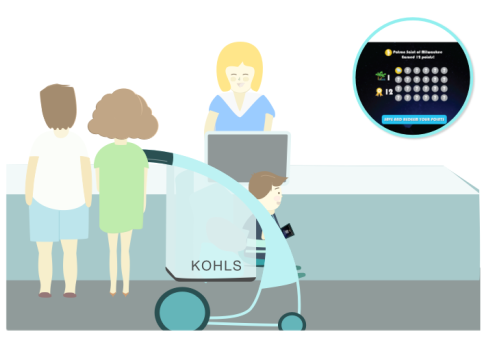
An associate scans the points Jessy collected — saving the family $2.60.
Tools
- Paper & pencil
- Sketch
- InVision
- Adobe Illustrator
- Keynote
Methods
- Shadowing
- RITE method
- Interviews
- Affinity diagram
- Elito chart
- Storyboarding
Skills
- Systems thinking
- Presentation
- UX research
- Storytelling
- Experience mapping
- Rapid prototyping